
ENC chart updates, fully automated and fleet-ready.
Weekly ENC chart updates reach every ship in your fleet on their own — and from your desk you can see exactly which vessels are ready and which need attention.
- First month free
- on one vessel, nothing to commit
- €70 per vessel
- per month · 10% fleet discount
- No USB sticks
- nothing carried to the bridge by hand
ENC chart updates should not depend on USB sticks
Safe navigation depends on charts being current. Yet on most vessels, keeping ECDIS up to date still means manual transfers, USB sticks nobody has verified, and hours of crew time — and when an update goes wrong, days of it. What those processes leave behind are compliance gaps and cyber risk.
DIDI Chart sits between the online world and your bridge. Chart data is collected and checked before it ever moves, brought aboard on its own, and handed to the ECDIS ready to install. Nothing reaches in from the outside.
Online data in. No risk out.
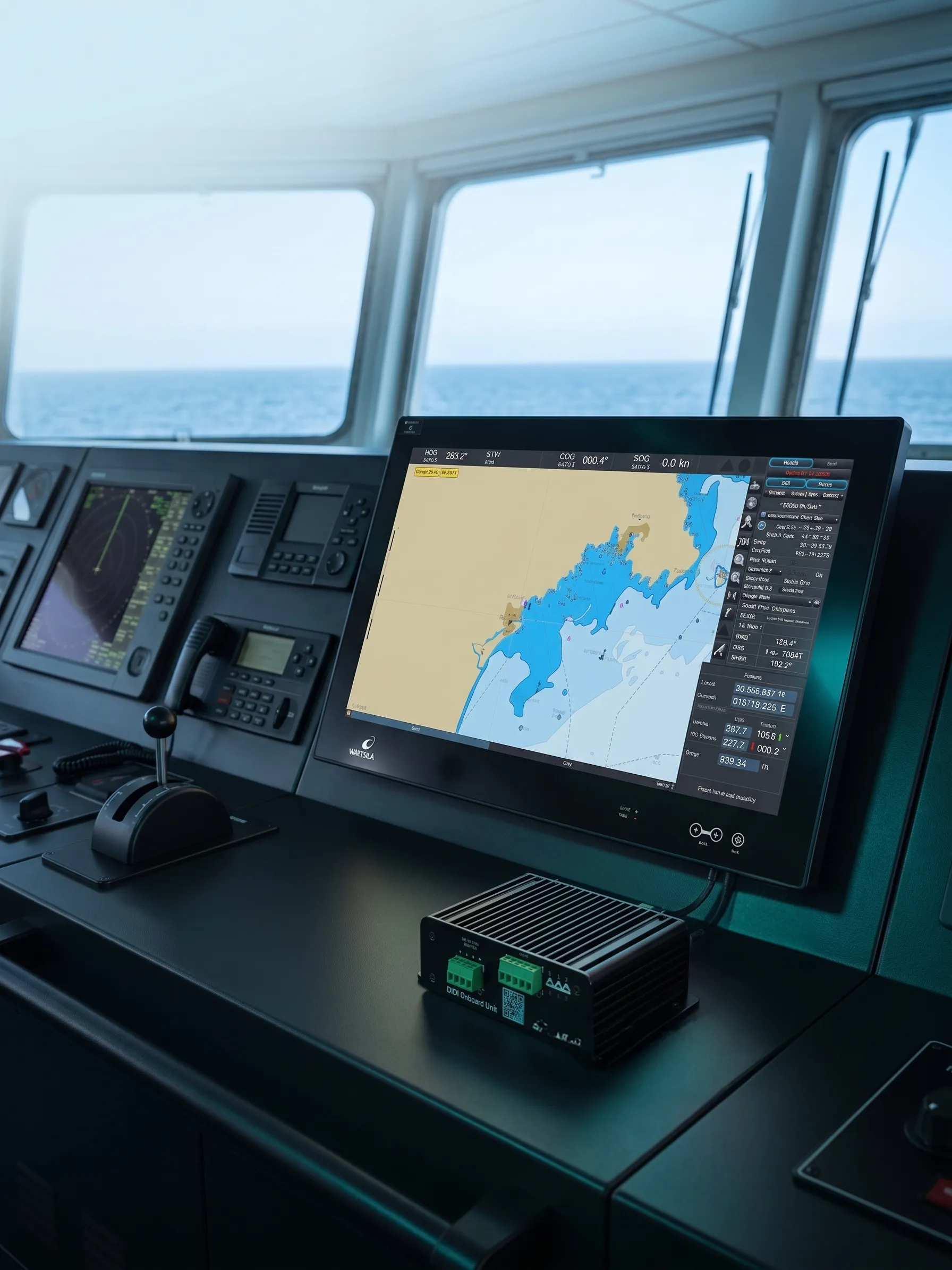
Every ship current, and you can see it
Every update arrives prepared, checked and ready to install — and from your desk you can see exactly where every vessel stands.
Chart updates reach the bridge without your vessel's systems ever being opened up to the outside world.

Crew time back
The weekly ENC update arrives on its own. No downloads to chase, no files walked to the bridge.
Fits the bridge you have
Any ECDIS, any make or model. No hardware changes, no technician, no bridge refit, no downtime to install.
No more chart emergencies
Your full portfolio is held on the onboard unit, so an ECDIS that loses its charts is rebuilt in hours instead of days — even at sea, with no connection.
Your whole fleet from your desk
Which vessels are current, which are pending and where attention is needed — in any browser, with no app to install.
Nothing to prove at inspection
Every update is recorded with date, vessel and result. PSC inspections, audits and vetting become an export.
Charts you can trust
SecureReceive verifies every file twice before install, so nothing incomplete or altered ever reaches the ECDIS.
Worldwide coverage with ADMIRALTY AVCS ENCs, on a weekly update cycle — and you keep the chart agent you already buy from. DIDI Chart works with any supplier, so your licences, your commercial terms and your existing relationship all stay exactly as they are. Permits are automated too: new and renewed cell permits are collected and applied along with the charts, so nothing waits on someone remembering to import a file. Official data reaches your ECDIS exactly as the supplier issued it, and the update record supports your cyber risk management, ISM documentation and vetting obligations. See the full specifications.
How it reaches the bridge
One compact unit on the bridge, one service ashore. Updates arrive over the internet connection your ship already has, are checked twice, and reach the ECDIS through a link that runs one way only — nothing comes back out.
Captain, we’ve automated the boring stuff. Thirty seconds inside DIDI Chart — One ENC update, collected, checked twice and handed to an ECDIS that never goes online and never sees a USB stick.
Works with all major ECDIS makes and models · keeps your existing chart supplier · no bridge refit, no downtime
See the full update sequence, step by stepThe biggest attack surface on board? The ENC update process.
Every removable device connected to an ECDIS is an open door, and every manual transfer is an audit finding waiting to be documented. DIDI Chart closes that door completely.
Reported worst cases include hacked ECDIS chart systems.
- +103%
- maritime cyber incidents in 2025 — 828 reported, up from 408 in 2024
- +150%
- growth in attacks on maritime operational technology systems
- $550k
- average cost of a single maritime cyber attack
CYTUR maritime cyber review, 2025. Longer trend: Naval Dome recorded a 900% rise in attacks on maritime OT systems from 2017 to 2020.
Three risks, and how DIDI solves each one
Removable media
A USB stick or disc, carried to the bridge and plugged into a type-approved navigation system — the exact route every cyber policy on board tries to close, kept open for charts.
No removable media
Nothing is plugged into the ECDIS. The USB route into the bridge simply closes.
The ECDIS online
Putting the ECDIS itself on a network so it can fetch files from shore — an inbound path to the one system the bridge cannot navigate without.
The ECDIS never goes online
Connections are outbound only, initiated from the vessel. No inbound path and no open ports on board.
Files nobody verified
Nothing checks what actually arrived. A partial or altered update installs exactly like a good one.
SecureReceive: nothing unverified arrives
Every file is hash-checked twice against the supplier's own values, under TLS 1.3 in transit. A partial update never reaches the ECDIS.
Four places you already have to show this
None of them asks for DIDI Chart by name. All four ask the same thing of you: show a controlled, evidenced path for data entering a safety-critical system.
That evidence is what DIDI Chart produces as a by-product of doing its job — an automated, verified path, and a record of every update with date, vessel and result.
What each one asks for, regime by regime- IMO MSC.428(98)
- Cyber risk has to sit in your SMS, and it is checked at every DOC verification.
- EU NIS2 · Directive 2022/2555
- Maritime transport is in scope, management is personally liable, and data integrity is required.
- BIMCO Cyber Security Clause
- Cyber measures written into the charter party, provable to the counterparty.
- OCIMF TMSA 3 · Element 13
- Vetting-relevant in tankers, where a weak Element 13 can cost you charters.
DIDI Chart is a documented technical measure for navigation data. It supports these obligations; it does not by itself make an operator compliant, and it is not a certification.
Already on more than 100 ships
Each one fitted into the bridge that was already there.
On your bridge
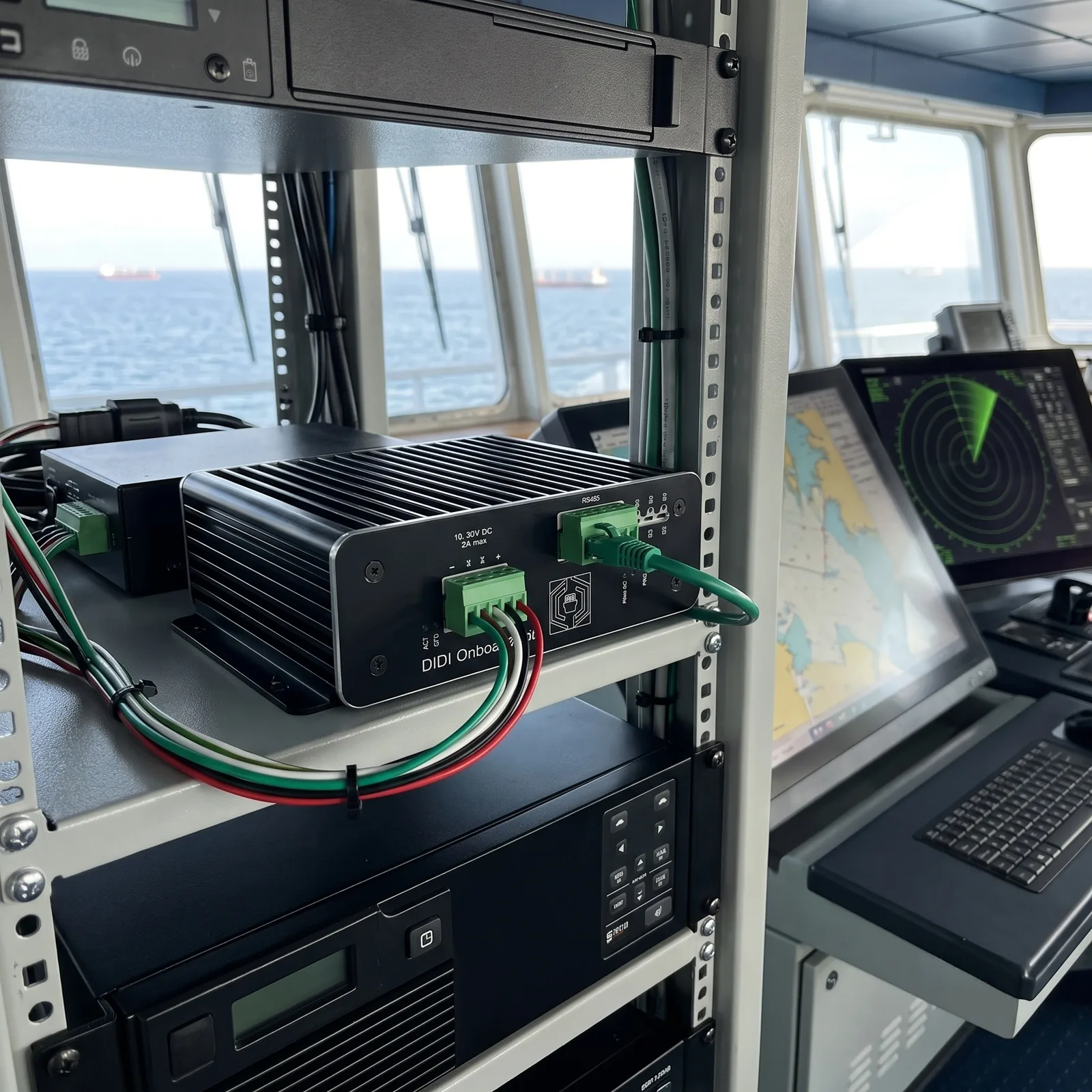
Installed in the existing bridge rack
The compact DIDI onboard unit mounts in the bridge equipment rack and connects over standard maritime interfaces — no bridge refit required.
€70 per vessel, per month
No yard time, no bridge refit, nothing taken out of service — an hour of an engineer’s attention.
First month free
Run it on one vessel for a month at no cost — the same unit, the same weekly updates, nothing to commit to. Most fleets start exactly here.
10% fleet discount
From five vessels, fleet orders take 10% off the per-vessel price — with one invoice and one rollout plan across the ships you choose.
Licences stay the same
You keep your chart supplier and your existing ENC licences. DIDI Chart changes how the data arrives, not who you buy it from.
Supported by established maritime service partners
DIDI Chart is offered through selected maritime service partners, including Datema Delfzijl B.V. in the Netherlands.
Datema is an established provider of nautical charts, publications, inspections and maritime safety services. By offering DIDI Chart to its customers, Datema supports a more secure and traceable workflow for ECDIS chart updates — built around the operational needs of real vessels and fleets.
Buy through a partner
What fleet managers ask before they sign
Straight answers about how the system fits into existing vessel operations.
Looking for interfaces, bandwidth figures or the full compliance mapping? The specifications page has all of it in one table.
One vessel, one month, no cost
Pick a ship, run it alongside your own ECDIS and connectivity, and judge it on what the crew and the dashboard tell you.
Download the DIDI Chart datasheet (PDF)